
Perspective · September 23, 2026
The "Perfect" Plate
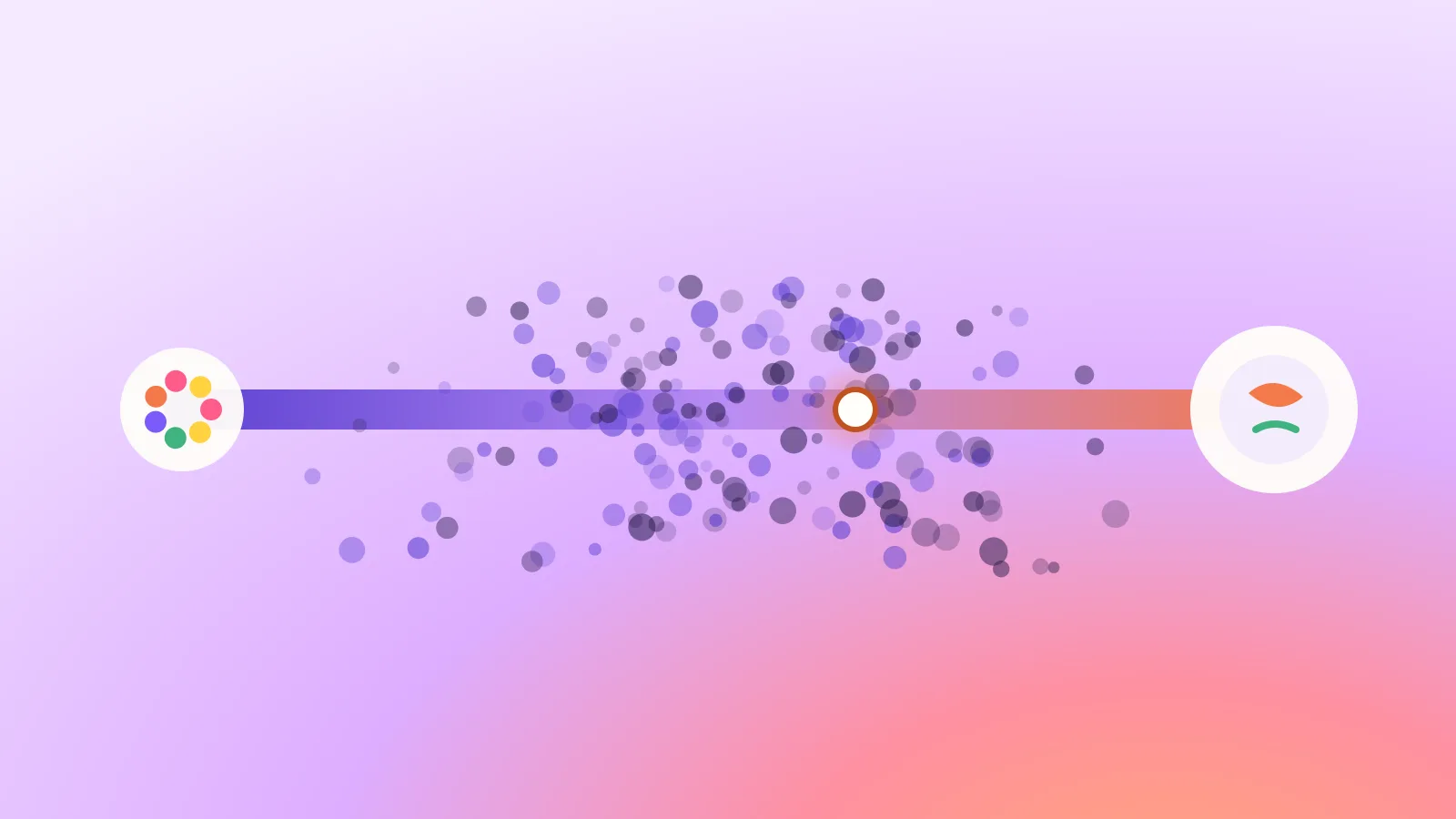
Salmon, kale, and quinoa on one end. Cotton candy with a side of gummy worms on the other. Nutrition is a spectrum, and the interesting part, the part with variety and your grandmother's lasagna in it, is the middle.
Let's play a game. I am going to describe two plates, and you are going to tell me which one is better.
Plate one: a piece of wild salmon, a pile of kale that somebody actually took the time to prepare well, and a scoop of quinoa. Plate two: cotton candy, with a side of gummy worms, and a small dish of Skittles for color.
You got it. Congratulations, you are a dietitian now.
The spectrum
Here is the thing nobody tells you about nutrition: it is not a pass or fail test. It is a spectrum, and it is a long one.
At one end sits that salmon plate, which is about as close to "perfect" as dinner gets. At the other end sits the cotton candy plate, which is close to the worst. Not the very worst. The very worst is probably a plate of gasoline with a side of asbestos, and I feel confident you were never going to eat that. So the cotton candy is not the bottom of the spectrum. It is just somewhere in the neighborhood.
Everything you have ever eaten lives somewhere on that line. The frozen pizza. The salad with too much dressing. The excellent tacos from the truck by the office. Your grandmother's lasagna. A banana. A handful of almonds at 3 p.m. because you forgot lunch. Every single one has an address on the spectrum, and almost none of them are at either end.
That is the first thing I want you to see. The ends are easy. The ends are where the arguments happen, the documentaries get made, and the guilt lives. But you do not eat at the ends. You eat in the middle. Everybody does.
The problem with perfect
Now here is the trap.
Suppose your only goal was perfect nutrition. Nothing else. No taste, no culture, no life around it. Just the numbers. You would work your way toward the perfect plate, and one day you would find it. Salmon, kale, quinoa. Or some version of it. And then what?
Then you would eat it forever. That is what "perfect" means. Once you have found the optimum, every change is a step down. There is no such thing as a perfectly nutritious plate with variety, because variety is, by definition, moving away from the one best answer.
Nobody wants that life. I do not want that life, and I am the dietitian. A way of eating with no variety in it is not a diet, it is a sentence. And people serving a sentence eventually break out, usually through the gummy worms.
Learn the middle
So if perfect is a trap and terrible is obvious, what is left? The middle. And the middle is where all the actual skill is.
Most people I meet can identify the ends. What they cannot do is tell the difference between a plate that is pretty good and a plate that is quietly not. They cannot see that the "healthy" grain bowl from the chain has more sugar in the sauce than the dessert would have. They cannot see that the tacos, with the beans and the salsa and the cabbage, are landing a lot higher on the spectrum than they feel guilty about. They round everything to "good" or "bad," and the rounding is where they lose.
If I could teach one thing, it would be this: know what the middle looks like. Know what a solidly good plate is, not a perfect one. Know what a slightly better version of what you already like looks like. Know that moving something from a four to a six, over and over, is worth more than occasionally hitting a ten and then collapsing to a one.
The middle is where variety lives. It is where your culture lives, and your family recipes, and the restaurant you love. It is also where almost all of the health benefit lives, because the difference between a six and a ten is much smaller than the difference between a two and a six. You do not need the perfect plate. You need a lot of good ones, and a real understanding of what "good" means.
Why this is actually hard
I want to end with the honest part, because it is the part that matters most.
If nutrition were just information, everyone would be fine. The information is everywhere. It is hard because food is not information to us. It really, really matters, personally. It is your mother's kitchen and the thing you eat when you are sad and the meal you had on your honeymoon. It is comfort and identity and celebration and, sometimes, the only reliable pleasure in a hard week. When someone tells you to "just eat better," they are asking you to renegotiate a relationship you have had since before you could talk.
That is why the spectrum matters. It gives you room. It lets you keep the lasagna and still move the average. It lets you have the cotton candy at the fair with your kid, because a plate at the bottom of the spectrum once a summer is not a failure, it is a memory, and the average barely notices.
Perfect is not the goal. A long, delicious life spent mostly in the good part of the middle, with people you love, is the goal. Salmon and kale can come along. So can the tacos.